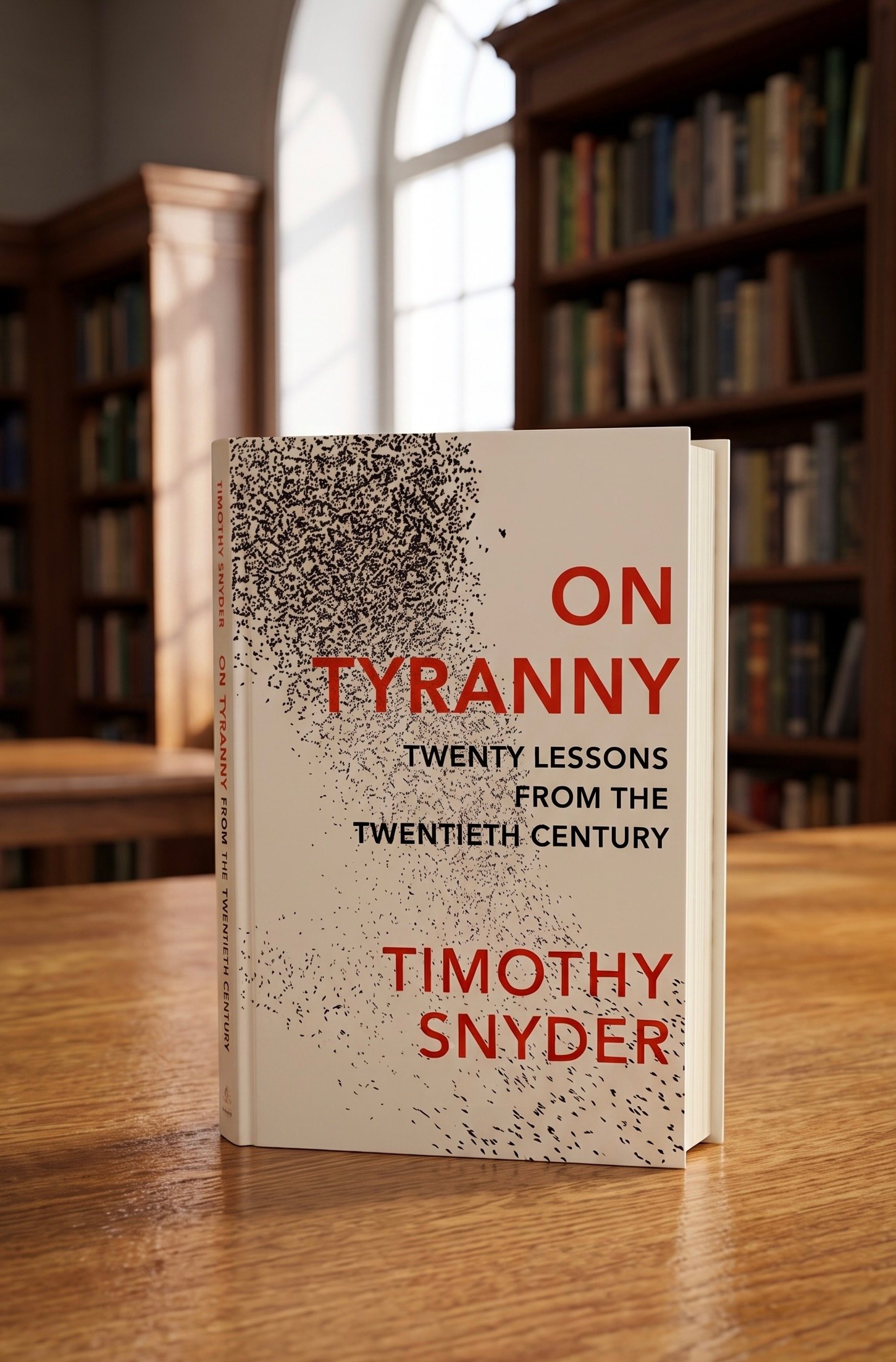
Title: On Tyranny: Twenty Lessons from the Twentieth Century
Author: Timothy Snyder
Publisher: Crown / Tim Duggan Books (2017)
Pages: 126
History does not repeat, but it does instruct
The book is a clarion call for all those concerned and spirited individuals who repose faith (albeit misplaced and short-lived) in institutions and sinews of governance that purportedly function in our favour, to put their foot down and start shouldering responsibility.
The author has drawn empirical anecdotes across the canvas of history about how lively democracies subtly are crumbled and humbled before the retrogression to authoritarianism.
It serves as a timely reminder about changes that we must keep a strict vigil on. It does so by enumerating some didactic lessons which on must inculcate to offset the rise of authoritarian tides.
The author laments that public usually render their anticipatory obedience to any government saying which he describes as a sure-shot path to submit our rational capabilities to a lurking state willing to extend its Leviathan reach over novel domains. Such pursuit often inevitably takes a hit on to the institutions which seem after persistent pressure to capitulate to the changes. There are numerous examples one can take from contemporary global politics where institutions toe the authority line despite such actions seemingly antithetical to public interests, which will suffice the point that the author makes in the book.
Life is political, not because the world cares about how you feel, but because the world reacts to what you do.
The book exhorts readers to take responsibility and perhaps prepares one to identify or even tackle such crises whenever they prop up. It typifies such approach by holding whenever history is kind to an individual by providing him a sliver of hope or opportunity, it should act inclusive (celebrate citizenry) instead of being opportunistic (extol virtues of state). To take this responsibility is contingent on harbouring professional ethics, as amidst disruptions from every nook and cranny, ethics remain constant.
Author peruses the conceptual tools of politics of inevitability and politics of eternity to ring alarm bells about how we have cast away history in comprehending our existential voyage. Such parochial view emasculates our ability to develop and evolve independent thinking capabilities which inversely increases the power of authoritarian rulers to pick and choose from history and manipulate and mould accordingly.
The book incisively puts forth not just a strategy to mitigate any unprecedented attacks on the fabric of democratic ideals but also enlists a charter to fulfil the same.
Given the dynamism and visibility across the globe, the book remains relevant for any individual who believes in meliorism and not simply and solely on manna.
